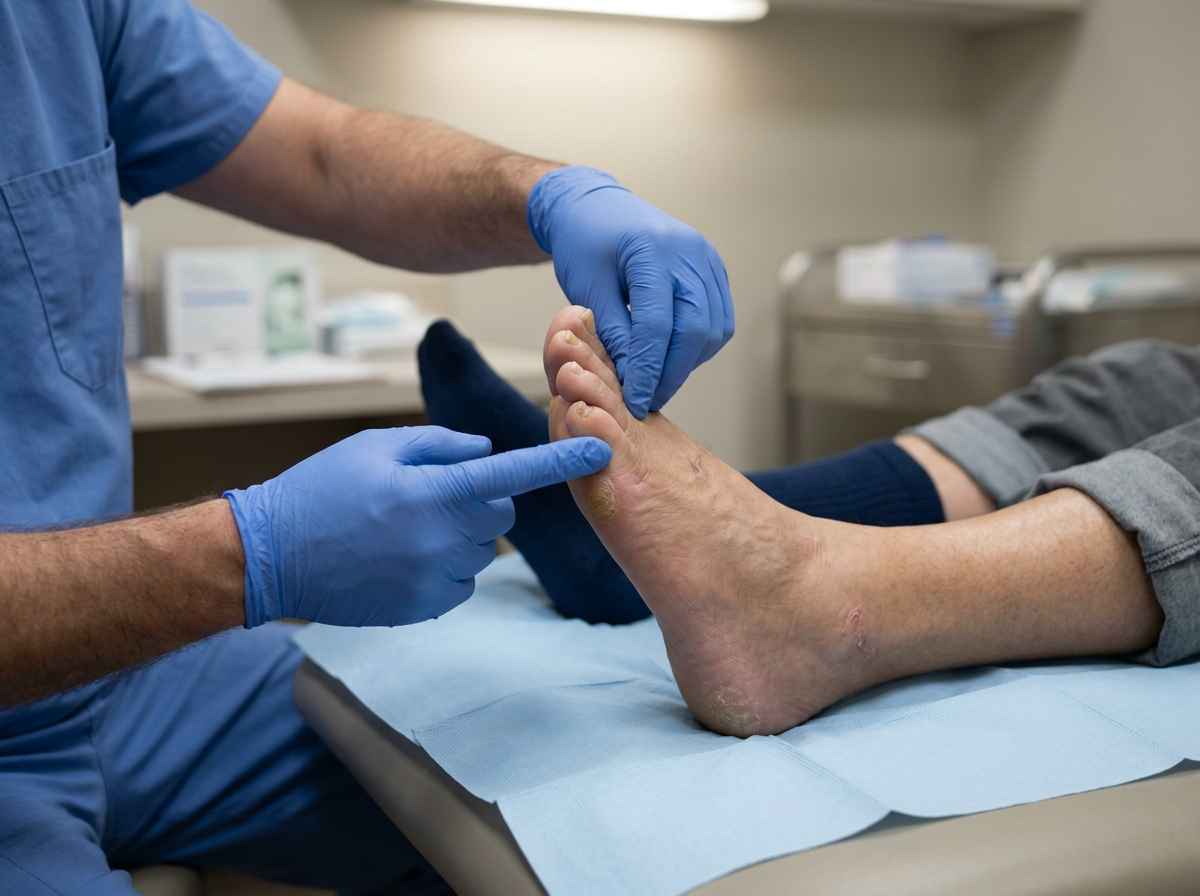
Diabetic Foot & Limb Salvage
Expert diabetic foot care, wound healing and limb salvage in Hyderabad — Dr Rahul Agarwal, Consultant Vascular Surgeon, CARE Hospitals Banjara Hills
Diabetic foot refers to a range of complications affecting the feet in patients with diabetes. These problems occur due to a combination of nerve damage (neuropathy), poor blood circulation, and increased susceptibility to infection. If not diagnosed and treated early, diabetic foot complications can lead to non-healing wounds, severe infections, and in advanced cases, amputation. Early evaluation by a vascular specialist can significantly improve outcomes and help in limb salvage.
Why Diabetic Foot Problems Occur
1. Nerve Damage (Diabetic Neuropathy)
Diabetes can damage nerves in the feet, leading to reduced sensation. Patients may not feel pain from small injuries, cuts, or pressure points, allowing wounds to worsen without being noticed.
2. Poor Blood Circulation
Many diabetic patients develop peripheral artery disease, which reduces blood flow to the legs and feet. Poor circulation delays wound healing and increases the risk of tissue damage. Uncontrolled blood sugar levels accelerate this process significantly.
3. Increased Risk of Infection
High blood sugar levels weaken the immune system, making infections more severe and difficult to control.
Common Symptoms of Diabetic Foot
- Burning and tingling sensation in feet
- Non-healing wounds or ulcers on the foot
- Swelling or redness around a wound
- Blackening or discoloration of toes
- Persistent foot pain or numbness
- Thickened skin or callus formation
- Foul-smelling discharge from wounds
Early recognition of symptoms is critical in preventing amputation.
Risk Factors for Diabetic Foot
- Long-standing diabetes
- Smoking
- Uncontrolled blood sugar levels
- Peripheral artery disease
- Nerve damage
- Poorly fitting footwear
Diabetic Foot Ulcers
A diabetic foot ulcer is an open sore that commonly develops on the bottom of the foot. These ulcers occur due to increased pressure, reduced sensation, and poor circulation. Without timely treatment, these ulcers can become infected and spread to deeper tissues including bone, leading to osteomyelitis and eventually limb loss. Learn how to tell the difference between diabetic, venous and arterial ulcers →
Importance of Vascular Evaluation
Many patients with diabetic foot ulcers also have reduced blood flow to the legs due to calcification in arteries and blockages. Vascular evaluation helps determine whether circulation needs to be improved through medicines or procedures such as angioplasty or bypass surgery. Early restoration of blood flow plays a crucial role in limb salvage as a good blood supply is required to heal an ulcer or wound.
Treatment of Diabetic Foot
Wound Care
Proper cleaning, dressing, and pressure off-loading help promote healing.
Infection Control
Antibiotics may be required when infections occur.
Improving Blood Circulation
In patients with poor circulation, procedures such as angioplasty and stenting or vascular bypass surgery may be necessary to restore blood flow to the foot.
Limb Salvage Procedures
Advanced vascular and surgical techniques can restore blood flow and prevent amputation in many patients. Find out why diabetics are 10x more likely to face amputation — and how to prevent it →
Preventing Diabetic Foot Complications
Treat your feet like you take care of your face
- Daily foot inspection
- Proper footwear
- Good blood sugar control
- Avoiding walking barefoot
- Regular medical check-ups
When to See a Vascular Surgeon
Patients with diabetes should seek medical evaluation if they notice non-healing wounds, discoloration of toes, or persistent foot pain. Early treatment can prevent serious complications and improve the chances of limb salvage.
Frequently Asked Questions About Diabetic Foot
What is a diabetic foot ulcer?
A diabetic foot ulcer is an open wound or sore that develops on the foot of a person with diabetes, most commonly on the sole or areas exposed to repeated pressure. Nerve damage reduces sensation so small injuries go unnoticed, while reduced circulation slows healing. Early diagnosis and treatment significantly improve the chances of healing and limb salvage.
Why do diabetic patients develop foot wounds?
Diabetic patients may develop foot wounds due to a combination of nerve damage (neuropathy), poor blood circulation, and reduced ability to fight infection. Because sensation in the feet is often reduced, small injuries may go unnoticed and gradually worsen.
Can diabetic foot ulcers heal?
Yes, many diabetic foot ulcers can heal if treated early. Treatment usually involves proper wound care, infection control, pressure off-loading, and evaluation of blood circulation. In patients with poor circulation, vascular procedures may be needed to improve blood flow and support healing.
How do doctors check circulation in diabetic foot patients?
Doctors evaluate circulation using clinical examination and specialised tests such as Doppler ultrasound, ankle-brachial index (ABI), CT angiography, or conventional angiography. These tests help determine whether reduced blood flow is contributing to poor wound healing.
Can diabetic foot complications be prevented?
Many diabetic foot complications can be prevented with proper foot care and blood sugar control. Regular foot inspection, wearing appropriate footwear, avoiding walking barefoot, and seeking medical attention for any wounds can significantly reduce the risk of complications.
What are the warning signs that a diabetic foot problem is serious?
Warning signs include non-healing wounds, increasing redness or swelling, blackening of toes, foul-smelling discharge, fever, or severe pain. These symptoms require urgent medical evaluation to prevent worsening infection or tissue damage.
Signs Your Diabetic Foot Needs Urgent Care
- A wound or ulcer that continues to enlarge instead of healing
- Increasing redness, swelling, or warmth around the foot
- Pus discharge or foul smell from a wound
- Blackening or dark discoloration of the toes or skin
- Sudden severe pain or increasing numbness in the foot
- Fever or general illness associated with a foot infection
These signs may indicate infection, tissue damage, or severely reduced blood circulation. Early treatment can often prevent the progression of disease and significantly increase the chances of saving the limb.
Book a Consultation with Dr Rahul Agarwal
CARE Hospitals, Banjara Hills, Hyderabad · Mon–Sat, 10 AM–4 PM
Medically authored and reviewed by
Dr Rahul Agarwal
Consultant Vascular & Endovascular Surgeon, CARE Hospitals, Banjara Hills, Hyderabad
MBBS · DNB (General Surgery) · DrNB (Vascular Surgery)
Related Reading
- Why Diabetics Are 10x More Likely to Need Amputation — And How to Prevent It
- Venous Ulcer vs Arterial Ulcer vs Diabetic Ulcer: How to Tell the Difference
- HbA1c and Vascular Risk: What Your Blood Sugar Number Really Means
- Angioplasty & Stenting for Leg Arteries — What to Expect
- Peripheral Artery Disease — Symptoms, Causes and Treatment