
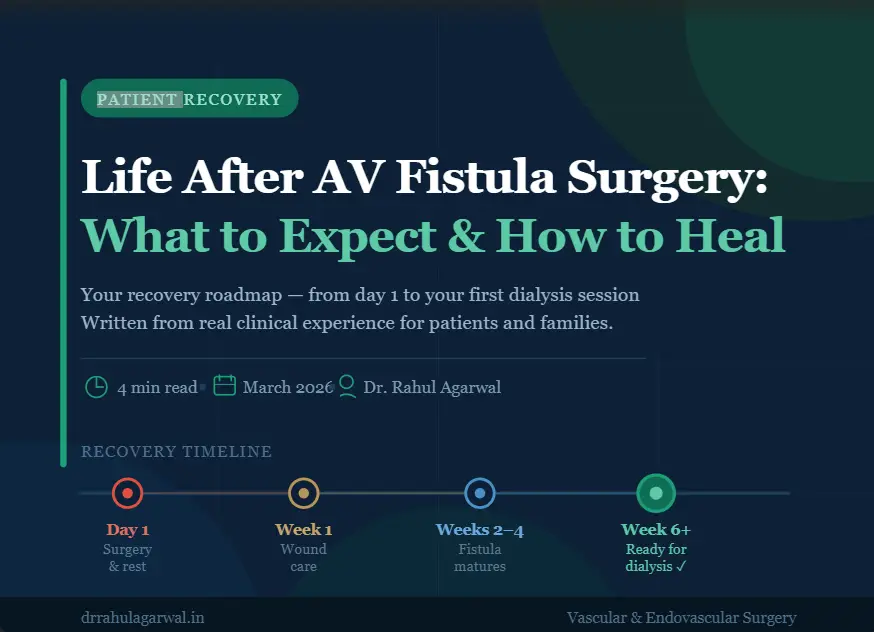
“This recovery timeline helps patients understand how an AV fistula matures over time and when it becomes ready for dialysis.”
Written by Dr Rahul Agarwal, Consultant Vascular & Endovascular Surgeon
CARE Hospitals, Banjara Hills, Hyderabad
Introduction
If you’ve just had AV fistula surgery, or you’re preparing for it, you probably have questions. What will recovery feel like? When can I use it? What’s normal and what’s not? We want to walk you through the journey step by step.
We want to walk you through the journey step by step, so you know what to expect and feel confident in your recovery.
Why This Topic Matters
A well-functioning AV fistula is essential for safe and effective dialysis. Before surgery, if you’re still deciding between access options, read our guide on dialysis access options: AV fistula, graft and central line.
Proper care during the recovery phase can prevent long-term problems and improve dialysis outcomes.
Understanding The Recovery Process
An AV fistula is created by connecting an artery to a vein. After surgery, the vein gradually enlarges and strengthens in a process called maturation. For a detailed explanation of this process and the Rule of 6s, see our dedicated post on AV fistula maturation: what it means, how long it takes, and what to do if it fails.
This process usually takes 6 to 8 weeks, but in some patients it may take longer.
Right After Surgery: The First Few Days 🏥
The days immediately after surgery are about rest and gentle observation. Here’s what’s normal:
- Mild swelling and bruising around the incision site
- Some tenderness or discomfort in the arm
- A slight buzzing or vibrating sensation (the thrill) — this is a great sign!
Keep the arm elevated when possible to reduce swelling. Follow your surgical team’s wound care instructions carefully, and avoid submerging the arm in water until the wound is fully healed.
The Maturation Period: Patience Is Key ⏳
“A fistula is not immediately ready to use. It needs time to mature — typically 6 to 8 weeks, though sometimes longer. This waiting period is not a setback; it’s a vital part of the process.”
During maturation, the vein gradually enlarges and the walls strengthen, making it easier for dialysis needles to access. Your care team will assess the fistula’s readiness through physical examination or ultrasound.
During this time, you may be asked to do gentle hand exercises to encourage blood flow and fistula development. Think of it as helping your body build something strong for the long term.
Managing Discomfort 😴
Some patients experience arm heaviness or aching in the weeks after surgery, especially as the fistula matures. A few things that can help:
- Keep the arm elevated when resting
- Use mild, approved pain relief as recommended by your doctor
- Avoid tight clothing or accessories on the arm
If pain is severe, worsening over time, or accompanied by other symptoms, please contact your care team promptly.
Getting Back to Daily Life 💪
Most people return to light daily activities within a few days of surgery. Heavy lifting or strenuous exercise should be discussed with your surgeon. For guidance on long-term daily care once healed, read our full guide on AV fistula care: daily tips to keep your dialysis lifeline healthy.
Talking to Your Caregivers 🗣️
If you have a caregiver supporting you at home, include them in your education process. They can help monitor the fistula site, remind you of medications, and provide a second set of eyes for any changes. A supported recovery is often a smoother one.
Warning Signs You Should Not Ignore ⚠️
- Increasing pain or swelling
- Redness or discharge from the wound
- Loss or reduction of thrill
- Fever or signs of infection
For a complete breakdown of all warning signs and what to do, see: warning signs you should never ignore with your AV fistula.
When to See a Vascular Surgeon
If your fistula is not maturing as expected, or if you notice any warning signs, early evaluation can help salvage the access. Learn about the full range of possible complications in our guide on AV fistula complications: causes, treatment and when you need a new access.
Frequently Asked Questions
1. How long does AV fistula take to heal?
Usually 6–8 weeks, but varies between patients. It can take longer in smaller or diabetic patients.
2. Can I use my fistula immediately after surgery?
No, it needs time to mature before use. Maturation is the process in which the vein becomes bigger and thicker over a few weeks, allowing for safe dialysis needling.
3. What if my fistula is not maturing?
Your vascular surgeon may suggest additional procedures to help maturation. See our detailed guide on what to do when a fistula fails to mature.
Key Insights
- Healing takes time — usually 6–8 weeks
- Proper care improves fistula success
- Early detection of problems is crucial
Related Reading 📖
- AV Fistula Care: Daily Tips to Keep Your Dialysis Lifeline Healthy
- AV Fistula Maturation: What It Means, How Long It Takes
- AV Fistula Complications: Causes, Treatment and When You Need a New Access
- Warning Signs You Should Never Ignore with Your AV Fistula
- Dialysis Access Options Explained: AV Fistula, Graft and Central Line
- Approaching Dialysis: A Patient’s Guide to Planning and Choices
About the Author
Dr Rahul Agarwal is a Consultant Vascular & Endovascular Surgeon at CARE Hospitals, Banjara Hills, Hyderabad, specialising in peripheral artery disease, varicose veins, dialysis access, and limb salvage.
Book a Consultation
If you have recently undergone AV fistula surgery or are facing recovery issues, consult Dr Rahul Agarwal for expert vascular care in Hyderabad.
Medical Disclaimer: This content is for informational purposes only and does not constitute medical advice. Always consult your treating physician or vascular surgeon for guidance specific to your condition.